



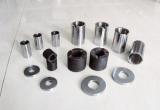
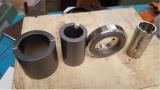
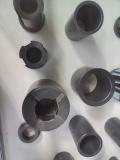
magnetic pump spare parts SIC bushing
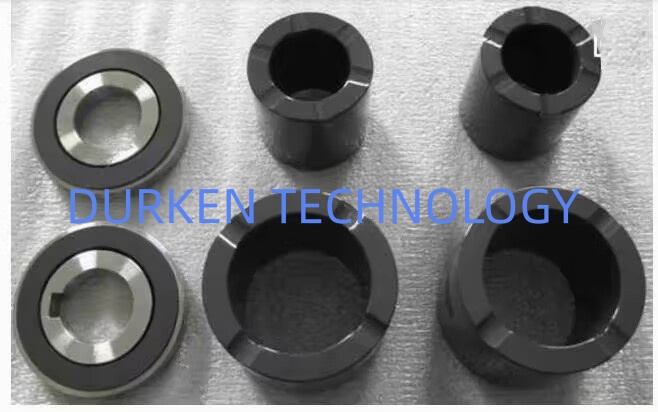
| Name: | magnetic pump spare parts SIC bushing |
Product Description

Advantages of Silicon Carbide (SiC) Components for Magnetic Drive Pumps
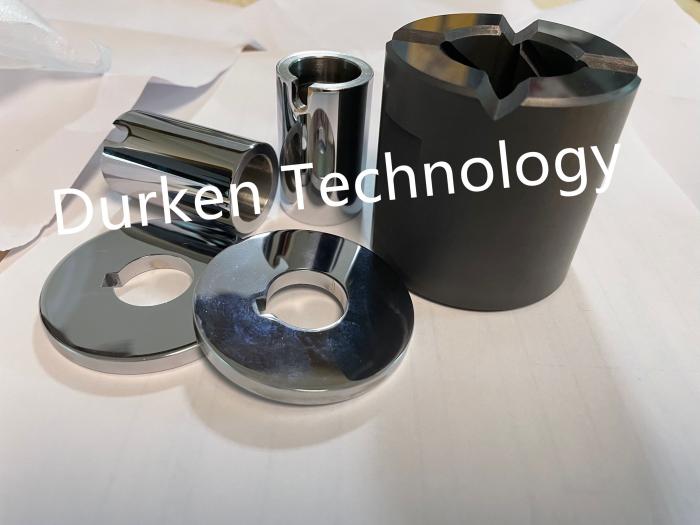
Silicon carbide parts (bearings, shaft sleeves, thrust rings) are key friction pairs inside magnetic‑drive pumps, commonly used in SiC‑to‑SiC mating configuration. Compared with graphite, tungsten carbide, PTFE and PEEK, silicon carbide offers outstanding performance.
1. High Hardness & Excellent Wear Resistance
Mohs hardness: 9‑9.5, second only to diamond, much harder than graphite, stainless steel and ordinary ceramics.
• Resists grooving and abrasion even with fine particles in the pumped medium.
• Low friction coefficient, minimal wear at high speed. Normal service life can reach 20 000‑25 000 operating hours under proper conditions.
• Graphite bearings fail quickly with fine impurities; SiC delivers far better anti‑wear performance.
2. Superior Chemical Corrosion Resistance
High chemical inertness, resistant to most acids, alkalis, salts and organic solvents, ideal for harsh chemical service.
Two main SiC grades:
• Pressure‑less Sintered SiC (SSiC): Nearly free of free silicon. Excellent resistance to caustic soda, phosphoric acid and boric acid. Best overall corrosion performance, higher cost.
• Reaction‑bonded SiC (RBSiC): Contains minor free silicon. Cost‑effective. Not suitable for hydrofluoric acid or hot concentrated strong alkali, where free silicon will corrode.
3. Excellent Thermal Performance, Minimal Thermal Deformation
• Low thermal expansion coefficient, resists seizure under temperature cycling. Working range: ‑80~200 °C.
• Good thermal conductivity, friction heat is easily carried away by process fluid, avoiding overheating damage.
• Graphite oxidizes at high temperature; PTFE / PEEK creep under heat, while SiC maintains stable properties.
4. Good Mating Friction Performance
SiC‑SiC friction pair with high surface finish. Process fluid forms liquid‑film lubrication for smooth low‑noise high‑speed operation.
No abrasive debris contaminates the medium, suitable for pharmaceutical and fine‑chemical applications.
5. Brief Comparison with Alternative Materials
1. SiC vs Graphite: Superior wear, particle‑resistance and high‑temperature performance. Critical disadvantage: SiC cannot run dry; instant damage will occur under dry‑running conditions, while graphite tolerates short dry‑run periods.
2. SiC vs Tungsten Carbide: Better corrosion resistance; slightly lower hardness, higher brittleness, more competitive price.
3. SiC vs PEEK / PTFE: Far better temperature resistance, wear resistance and load capacity. Polymers are only for low‑pressure, low‑temperature light‑duty service.
Limitations of Silicon Carbide
1. High brittleness, vulnerable to cracking from impact by large hard particles.
2. Strictly prohibited from dry‑running. Rely entirely on pumped liquid for lubrication and cooling; dry‑run will destroy components rapidly.
3. For hydrofluoric acid and hot concentrated strong alkali, select pressure‑less sintered SSiC instead of reaction‑bonded RBSiC.
Typical Applications
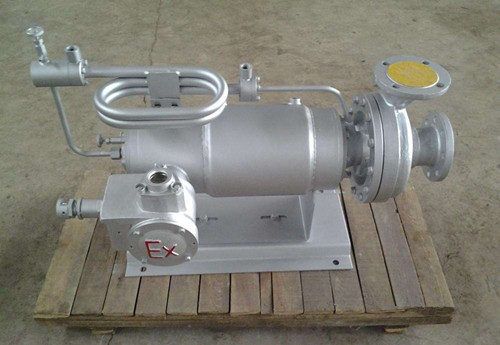
Magnetic‑drive chemical pumps, fluorine‑lined magnetic pumps. For acid‑alkali solvents, media with fine particles, high‑temperature service and 24‑hour continuous operation, SiC friction pairs are preferred.



 Send Email
